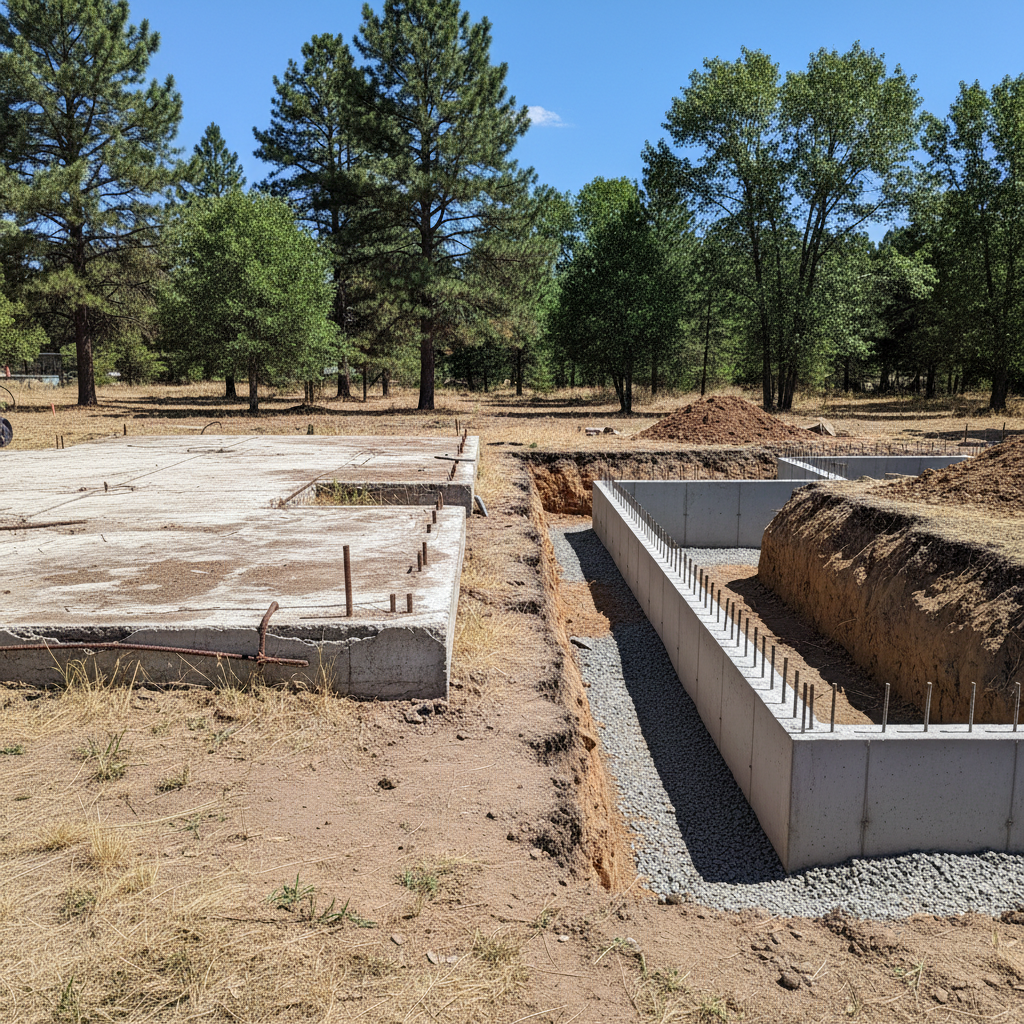
Alright, let's talk foundations. You're building a new home, or maybe adding on, and someone's asked you about a slab-on-grade versus a crawl space. This isn't just some technical detail for the builder; it's a really big decision that impacts your home's comfort, cost, and even how you deal with repairs down the line. As someone who's dug more foundations than I can count around Flagstaff, I've seen the good, the bad, and the ugly of both.
Slab-on-Grade: The Ground-Hugger
A slab-on-grade foundation is exactly what it sounds like: a thick concrete slab poured right on the ground. Before that concrete goes down, we prep the site, compact the soil, lay down a vapor barrier, and install any plumbing or electrical conduits that need to be inside the slab. Then, boom, concrete.
The Good Stuff About Slabs:
- Cheaper to Build: Generally, slabs cost less to put in upfront. There's less digging, no need for a lot of perimeter walls or floor joists, and less concrete overall compared to a full basement or even a deep crawl space. For folks on a budget, this can be a big plus.
- Faster Construction: Less complicated usually means we can build it quicker. Once the site's prepped and the rebar's in, it's a one-shot pour.
- Energy Efficient: A slab can hold heat well, especially if it has radiant heating built in. It acts like a thermal mass, which is a real benefit during our long Flagstaff winters. Less air getting in means less heat escaping.
- Tough and Pest Resistant: There's no dark, damp crawl space for critters to set up shop. Termites, rodents, and other pests have fewer entry points and less habitat. It's a solid, impenetrable barrier.
Where Slabs Fall Short:
- Hard to Access for Repairs: This is the big one. If you have a plumbing leak or electrical issue under the slab, you'll have to break up concrete. That's messy, expensive, and a huge disruption. I've seen homeowners in older parts of town, say near the NAU campus, dealing with this when old cast iron pipes finally give out.
- Moisture Problems: A good vapor barrier helps, but if water does get under the slab, it can be really tough to dry out. This can lead to mold or mildew problems if it's not handled right during construction or if there are drainage issues around the home.
- Less Flexible for Changes: Want to add a new plumbing fixture or move a wall that needs new electrical? It's a much bigger headache than with a crawl space.
- Comfort: Some people find slabs feel colder underfoot, even with insulation. They also transmit ground temperature more directly to your feet.
Crawl Space: The Elevated Option
A crawl space foundation involves digging a shallow area, then building short foundation walls that raise the home off the ground. This creates a space usually 2-4 feet high. Your home's floor then sits on joists over this space.
The Good Stuff About Crawl Spaces:
- Easy Access for Utilities: This is the main reason many folks choose a crawl space. Plumbing, electrical, and HVAC ducts are all easy to get to for maintenance, repairs, or future modifications. No jackhammering concrete to fix a leaky pipe here.
- Better Air Quality: With good ventilation and a proper vapor barrier, a crawl space can help improve indoor air quality by keeping moisture away from your living space.
- Comfort: The air gap between the ground and your living space provides an insulating layer. This often makes floors feel warmer and the whole home more comfortable.
- Flexibility: Want to run a new data cable, add a gas line for an outdoor grill, or upgrade your HVAC? It's usually a breeze in a crawl space.
Where Crawl Spaces Fall Short:
- Higher Upfront Cost: More digging, more concrete for walls, more materials for the floor system (joists, subfloor). It all adds up.
- Pest and Moisture Risks: An unsealed or poorly vented crawl space is an open invitation for moisture, mold, and pests. We've seen plenty of homes in the Doney Park area with moisture problems in their crawl spaces due to bad drainage or ventilation. Proper encapsulation and pest control are critical.
- Energy Efficiency: If not insulated and sealed correctly, crawl spaces can lose a lot of heat in winter and gain a lot in summer.
- Maintenance: They need occasional inspection for moisture, pests, and structural issues. It's not something you can just build and forget.
So, Which One for Flagstaff?
Here in Flagstaff, we've got some unique challenges, don't we? We get a lot of snow, which means a lot of meltwater. Our soil, especially the volcanic cinder we often encounter, can be tricky. And those cold winters mean heating costs are a real concern.
For most new home builds in Flagstaff, I lean towards a crawl space foundation. Here's why:
- Protects Plumbing: Our freezing temperatures can be brutal on pipes. Both foundation types need good insulation, but if a pipe does burst in a crawl space (and it happens!), it's a much simpler fix than tearing up a slab.
- Manages Moisture: With proper grading, drainage, and encapsulation, a crawl space lets you manage moisture much more effectively. We can install sump pumps, vapor barriers, and dehumidifiers if needed. This is crucial with our heavy snowmelt and monsoon rains.
- Future Proofing: Homes aren't static. You'll want to upgrade, repair, or change things over the decades. A crawl space makes that infinitely easier and less expensive.
- Comfort: That air gap really does make a difference in keeping your floors warmer in winter.
Now, don't get me wrong. A well-built slab can be perfectly fine, especially if you're on a tight budget and are super careful about your initial plumbing and electrical installation. But for the peace of mind and long-term flexibility, a crawl space often wins out in our climate.
No matter which way you go, the prep work is key. You need a solid, well-drained site. That's where Mighty Excavating Inc comes in. We make sure your foundation, whether it's for a slab or a crawl space, starts on the right foot – or rather, on the right ground. Don't skimp on the excavation; it's literally the foundation of your home.
Think about what's most important to you: upfront cost, ease of future repairs, or energy efficiency. Talk to your builder, and if you've got questions about the ground prep, you know who to call.